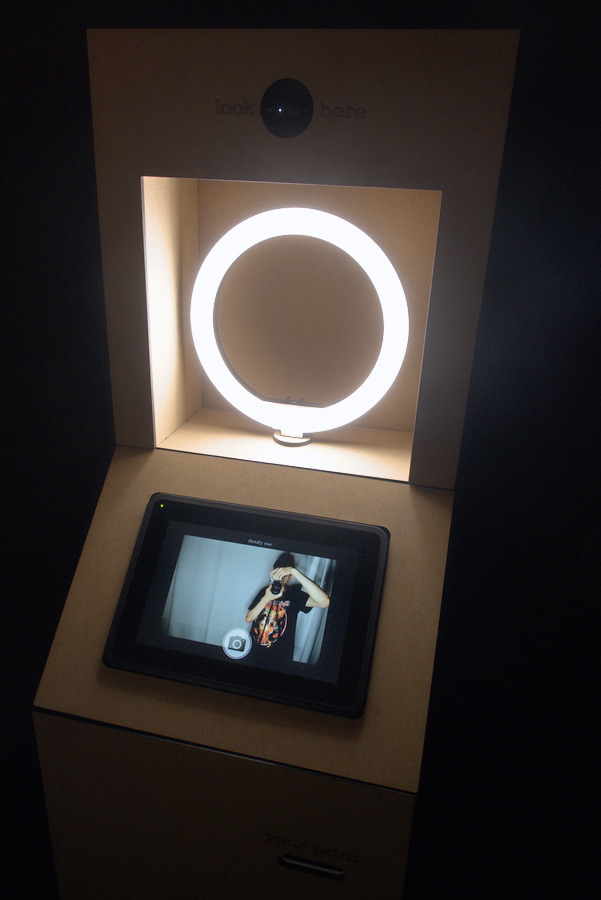
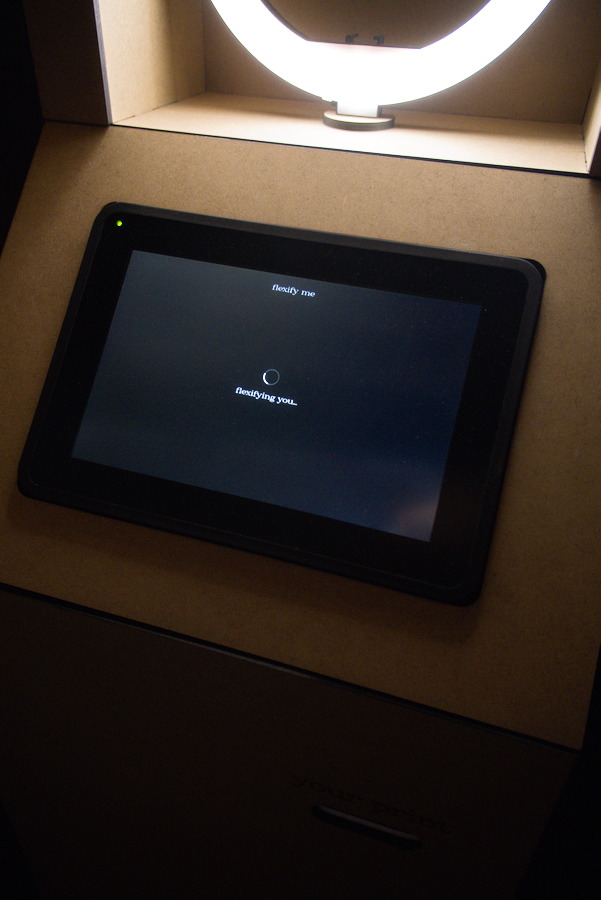
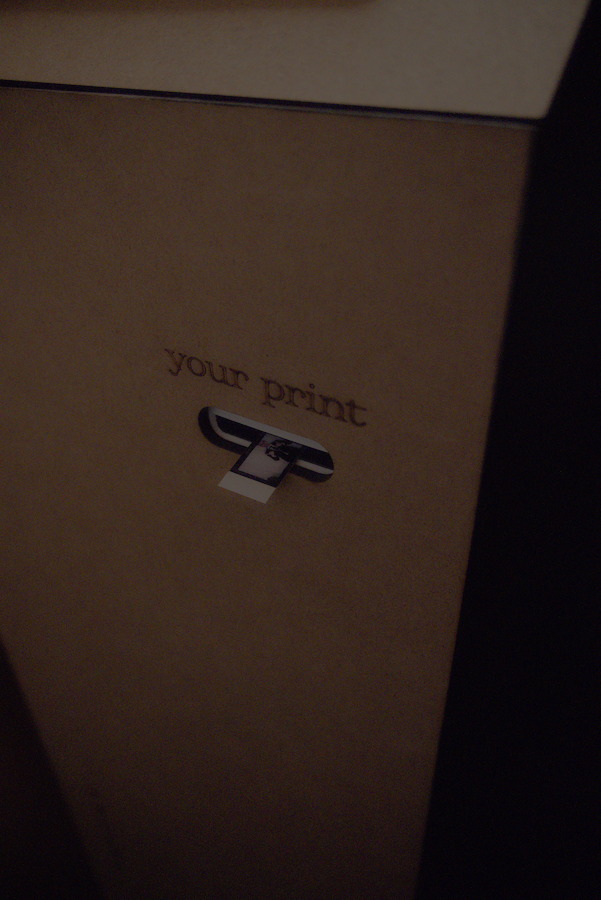
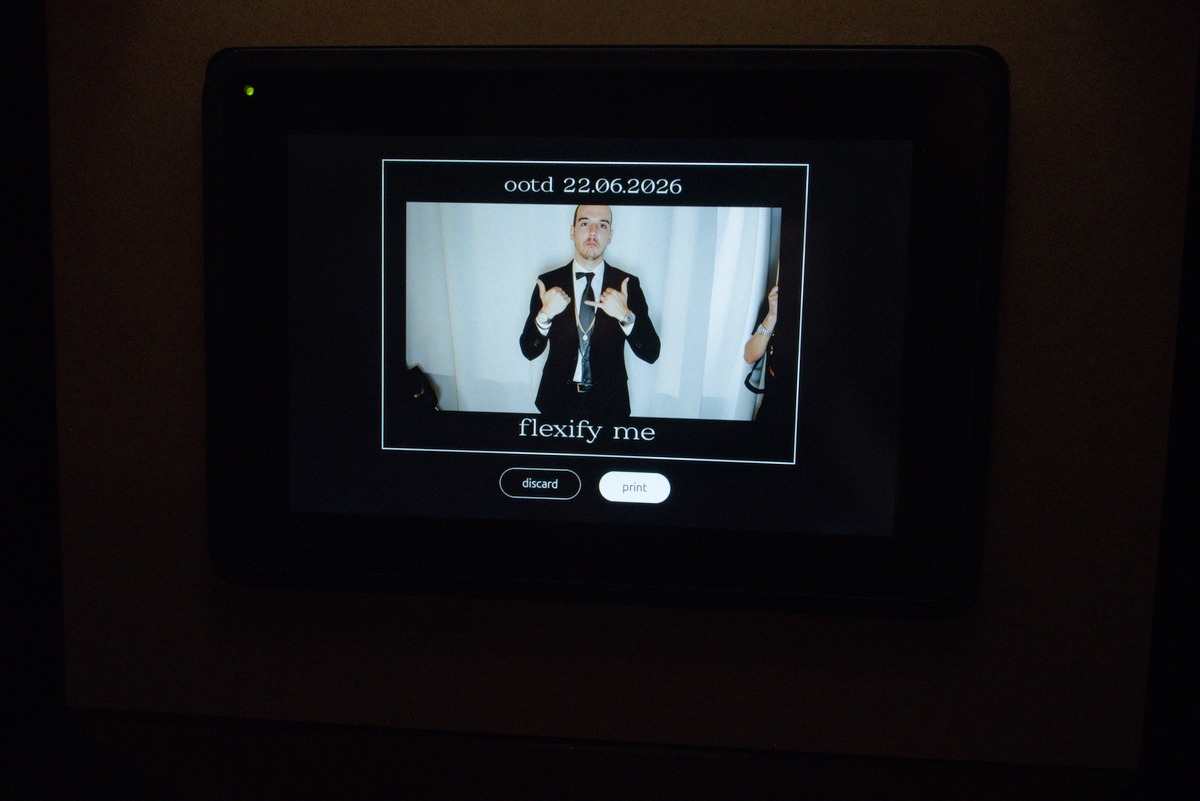
The Future of Flexing
How generative AI disrupts the current culture of conspicuous consumption in social media
An essay by Felix Stadler Marcos
1. Introduction
In early 2026, "Pika Labs" uploaded a puzzling video, advertising a new AI tool94, which allows users to create avatars of themselves. These avatars can be tailored to exactly what the user wants—not only visually but also in terms of behaviour and activities. As entirely synthetic entities, these avatars can lead a life of beauty and luxury, and be made available for texting and calls 24/7 to as many people as needed, while their creators are otherwise occupied. In short, users can have their avatars embody their dreams and desires—though they themselves experience none of it. Pika suggests that these avatars can be monetised, as other users pay to interact with them, but the main selling point appears to be the potential for self-representation in the digital world.
This essay will argue that this self-representation is a manifestation of an inherent human desire, one that has become a mass culture central to consumer society. We can call it the "culture of flexing": the ubiquitous practice of publicly performing one's status, identity, or aspirations. Examples like Pika, as well as the general direction in which social media and the broader digital context are moving, suggest that generative Artificial Intelligence may threaten this flexing culture. In the following, we will examine whether and how generative AI disrupts the current culture of flexing and conspicuous consumption in social media, and we will briefly speculate on the future of flexing.
2. Theoretical Contemplations on the Future of Flexing
2.1 Social Media
To understand the implications of generative artificial intelligence (genAI) on the culture of flexing present in the current social media landscape, we must first define what constitutes the latter.
Social media generally encompasses any communication medium used for two-way interaction.1 In the following, we will use the term "social media" for a more limited definition: Social networking services and other platforms, where individuals can create individual user accounts and post media content (such as texts, images, or videos) and view, interact with, or share content posted by any other user account. As of 2026, prominent examples include but are not limited to "Instagram", "X" (formerly "Twitter"), "Reddit", and "TikTok".
2.2 Conspicuous Consumption
The "culture of flexing" or "flexing culture" can be understood as the growing use of social media for purposes related to conspicuous consumption.2 Conspicuous consumption was first described by Thorstein Veblen in 18993 as the public consumption of goods to display wealth and maintain or gain social status. He also described "conspicuous leisure"—the public display of non-productive, leisurely behaviour—to signal that one's wealth eliminates the need for work. Arrow and Dasgupta question the observability of leisure, instead recognising its contemporary relation to the observable consumption of goods.4 And Slovenian philosopher Slavoj Žižek argues, that our current form of society is one of consumerism where almost every experience is commodified anyway.5 Based on these ideas, we can categorise leisurely and experiential non-productive behaviours as forms of conspicuous consumption.
2.3 Status
Hierarchical societal structures are a ubiquitous feature of life on earth6, appearing in many species and nearly all human societies.7&8 With hierarchy always comes the concept of status. In stratified human societies we can differentiate two fundamental types of hierarchical standing or status. First, the "economic position in a society"9 (i.e., the immediate availability of material or financial resources to an individual). Second, and most critically10, social status. That is the standing an individual actually holds in society, as ascribed to them by others.11
The following sections will attempt to summarise and combine various theories on social status. This is an important basis for later understanding how conspicuous consumption and the contemporary culture of flexing have developed.
2.4.1 Status Capitals
Pierre Bourdieu's theory of capitals12 states, that social status can be determined by four fundamental "capitals" each human holds:
(1) Economic capital: All capital immediately convertible to money
(2) Social capital: Resources available through membership and position in groups or networks
(3) Cultural capital: Knowledge and skills in areas of culture
(4) Digital capital: Knowledge and skills in digital fields, as suggested by Rodríguez-Camacho et al. (2024)13
2.4.2 Status Perception
It is important to stress that the way these capitals form an individual's social status is based on perception from the other members of society. An individual's status may vary across groups or contexts, as different audiences apply distinct criteria or weights to the same capitals.14 Adding to this, capitals are not always directly observable, and their perception can be intentionally or unintentionally skewed based on the situation. Further, in the absence of direct information about an individual's traits, status can be inferred (e.g., through stereotypes or categorical associations).15 Thus social status is dynamic and relational and strongly influenced by conspicuousness and perception.
2.4.3 Social Networks
We can describe the relationships between social actors in a society as a network, where each individual occupies a position defined by their connections to others. Dense clusters within such networks ("cliques") and brokerage positions (connecting otherwise disconnected groups) represent distinct structural roles. Research on network dynamics suggests that holding a brokerage position—spanning "structural holes"16—is linked to higher social status than being at the centre of a clique.17
According to Bourdieu's theory of capitals, an individual's network position could be considered part of their social capital. Network-based theories of status hierarchies (e.g., Tortoriello et al.) argue, that structural position itself may be more fundamental than individual qualities (or "capitals") in determining status. Regardless of this debate, both theories suggest an individual's status within a social hierarchy only changes if their relationship to other individuals within the social network changes.18 This isn't at contradiction with the aforementioned importance of perception in forming social status; rather, it underscores that status is both a product of an ever-changing network structure and the subjective evaluations of others.19
2.4.4 Status Judgement Reference Groups
Status judgements are not absolute but rather relative to social circles individuals identify with or aspire to.20 Following Robert K. Merton's reference group theory, two individuals' judgement of each other is insignificant for their standing within their respective groups, if those groups are sufficiently distinct. Take, for example, a wealthy Person A belonging to a social circle of elites B and a lower-class person X belonging to their respective community Y. When A judges X and simply categorises them as "not one of us", this is largely irrelevant for how X is seen within group Y. When X starts displaying a status symbol, such as a tuned car (through conspicuous consumption, implying skill, resources, or cultural capital), this can elevate their position within group Y. But this status symbol may carry no weight for members of group B, where status is signalled through different markers (e.g., private education, exclusive memberships), thus not affecting A's judgement of X. We can conclude social status is a product of shared meanings within many possible reference groups, not one objective hierarchy.21
2.5 Flexing Culture
2.5.1 Conspicuous Consumption and Social Media
Conspicuous consumption, as originally described by Veblen, focussed on economic capital, which would be made publicly visible "through the physical display of actual material purchases"22 to gain status. Social media allows for this to be broadcasted much more efficiently, as displaying luxury items as an indicator of wealth online can reach broader audiences23 in much shorter time24; nearly instantly to anywhere in the world, as long as there is an internet connection. Furthermore, it makes displaying experiential consumption more attractive.25 For Veblen a vacation—as leisurely activity—would require bringing souvenirs to become conspicuous, as otherwise it would remain invisible to those not physically present. This type of material proof is no longer necessary, when photos and videos documenting the experiential consumption are the primary medium used in social media. This has led to a shift, where "experiential purchases are more likely to be posted than material purchases"26 and all social classes participate in social media based conspicuous consumption.27&28
2.5.2 From Conspicuous Consumption to Flexing Culture
"Flexing is a common term or slang that describes [...] someone is showing off something".29 Our broader definition of conspicuous consumption, the public display of any non-productive behaviour to signal elevated status, suggests all status capitals have been commodified to serve flexing culture. Crucially, flexing is always conspicuous by nature, and in a consumer society, it is inextricably linked to consumption; whether of goods, experiences, or even intangible capitals like knowledge or connections. Private education, for example, may not be purchased for flexing, but its display (e.g., posting a graduation photo from an elite institution) turns it into one. The result is what we can call "flexing culture", which "has become part of the mass culture that has resulted in automation in everyday life that cannot be separated from the consumer society".30 This culture is deeply intertwined with social media, which has not only enabled its rapid spread31 but also normalised the act of performing status for global audiences.
While flexing as a term describing the act of showing off is relatively new, the idea behind it is likely as old as humanity itself, if not older. Pliny the Elder describes in his encyclopedic work "Naturalis Historia"32 how in ancient Rome silver and gold possessions were a denominator of wealth, which would frequently be displayed to gain status perception33—undoubtedly an act of conspicuous consumption—to the point of certain individuals inconveniently moving extravagant quantities of silverware around the empire, just to prove they could.34
2.5.3 The Psychology of Flexing Behaviour in Consumer Society
While we have established that flexing behaviours are common and serve to maintain or gain status valuation, we have not yet examined whether this fully accounts for its contemporary ubiquity. We can construct a more multilayered psychological and sociological framework behind flexing culture from various modern theories:
(1) Social Comparison Theory (Leon Festinger, 1954)35
Humans have an innate drive to evaluate themselves by comparing to others, especially in ambiguous domains (e.g., status, success). Through the aforementioned dynamics of status signalling and status perception, flexing serves as a fundament for permanent comparison. This is amplified by social media, where flexing content can reach broad audiences, who compare themselves based on content they view. This boosts the presence of flexing content in what social media algorithms push to users, motivating them to also post flexing content and creating a positive feedback loop.
(2) Self-Presentation Theory (Erving Goffman, 1959)36
Individuals engage in impression management to control how others perceive them, using "front stage" performances (e.g., social media posts) to project idealised identities. This ties in with Jean Baudrillard's idea of "sign-value"37, which explains how flexing turns possessions into props for identity performance. This sign-value, according to Baudrillard, is the only significant value of an object in consumer society, even if it also possesses functional value.38 Owning the latest flagship phone might yield marginal functional benefits over the previous phone generation, but it is really only consumed for its sign-value: Acting as a means to conspicuous consumption, placing the consumer in a prestigious minority, and signalling their awareness of trends and fashions. Flexing this purchase online will modify the consumer's perceivable identity, which can be the conscious or even unconscious driver of their purchase.
(3) Symbolic Self-Completion Theory (Wicklund & Gollwitzer, 1982)39
When people feel their self-identity is incomplete (e.g., "I am not successful enough"), they acquire and display symbols (e.g., luxury brands, exotic travel) to fill the gap. This closely ties in with the aforementioned self-presentation theory and the consumption of commodities with signal-value, but lays an emphasis on a desire more closely related to the field of clinical psychology, suggesting that "flexing behaviour is related with a person's insecurity".40
(4) Status Anxiety (Alain de Botton, 2004)41
Consumer society fosters chronic anxiety about one's social standing, where individuals fear being perceived as ordinary or inferior. This anxiety is exacerbated by social media and other factors inherent to consumer society, such as advertising, which constantly showcase idealised success as both ubiquitous and easily attainable. Here, flexing thus serves as a defensive mechanism to prevent social devaluation, with the primary driver being shame-avoidance.
These theories show various overlaps, such as the charging of objects with sign-value, the constant self-display and consequential comparability of everyone, and the anxiety-driven pressure for flexing behaviour. Together, they explain how flexing behaviour causes FOMO ("fear of missing out")42, pushing users into flexing and trapping them in a loop that becomes hard to escape; Immediate, quantifiable feedback on their posts creates a dopamine-driven addiction that reinforces flexing as a habit.43 And once in the loop, users will find a need to keep flexing in order to maintain their status.44 This results in a global, 24/7 performance; "a new paradigm in human behaviour that nothing is private, all practices must be a public consumption".45
2.5.4 The Collective Dynamics of Flexing
The Simmel Effect
We now know why individuals flex, but this doesn't yet explain how these behaviours spread, evolve, or collapse across societies. One of the most prominent theories on the "emergence and maintenance of social hierarchies"46 through status symbols was described by Georg Simmel at the turn of the 20th century, "when he attempted to explain the rapid diffusion and decline of fashion."47 In his theory, social agents are driven by a desire for imitation and at the same time distinction. Imitation means that lower classes adopt symbols from higher classes to signal upward mobility. And distinction on the other hand drives higher classes to abandon symbols once they become too common, seeking new markers of exclusivity.
These two effects lead to a predictable lifecycle, where hierarchies can "persist under the variability and instability of its status symbols."48 Because the moment a symbol (e.g., a viral flexing trend) achieves dominance, its status value plummets, forcing elites to innovate and restart the cycle; a behaviour referred to as "Simmel effect". Crucially, this requires a middle class; agents who both imitate the elite and distinguish themselves from lower classes.49 Without this dual behaviour, hierarchies either stagnate (no imitation) or dissolve (no distinction).
The Mechanics of Fashion Spread
Now many of Simmel's ideas have stood the test of time quite well, but his strict trickle-down hierarchy struggles to account for modern fashion dynamics.50 As critiques note, trends now emerge from anywhere in the social hierarchy or from media influences and even elites now imitate lower classes.51 Fashions furthermore don't die once trickled through society, but rather hibernate and return in recycled manner.52 These gaps demand a model where trends are emergent, multi-directional, and agent-driven, not just elite-initiated.53
One such model, suggested by Alexander & Upal54, shows how individual psychology scales into trends: it treats fashion as a network-like system of interacting social agents (similar to the previously discussed idea of social networks), where a trend's spread depends on Ql: The prestige of role models (e.g., influencers with high cultural capital), Qn: The critical mass of adopters (e.g., a trend's viral momentum), and the Ability/Interest factor: Individual constraints (e.g., financial means, personal taste). The lifespan of a trend here greatly depends on a "minimum switch time" (D)55 agents need for choosing whether to follow or not. Without this, trends spike and die instantly56 (like a viral TikTok challenge that fizzles in a week). Similarly, if people over-index on prestige (Ql > 0.6), trends collapse under their own hype (e.g., a fad so exclusive it never gains traction). But not everyone can flex. The model's Ability/Interest factor explains why some trends remain niche (e.g., private jet travel cannot be afforded by most) while others go viral (e.g., a "normie" brand with low Ql like Crocs becomes a flexing staple through sheer Qn momentum).
2.5.5 Hyperreality: The Simulacra of Status
So if signs like status symbols are temporary and arbitrary in order for these fashion dynamics to function, are trends and status hierarchies a collective illusion? As Baudrillard argued, in a consumer society, the sign-value of an object (its ability to signal status) decouples entirely from its use-value (its functional purpose). In a system subjected to the aforementioned dynamics, the value of a newly released watch isn't in telling time; it's in the momentary exclusivity of owning one before the symbol diffuses. With social media, this sign-value becomes explicit (likes, shares, and follower counts quantify the symbol's power), and the mass of circulating signs and trends creates a limbo both decoupled from reality and yet impossible to distinguish from it.
Baudrillard refers to this as "hyperreality" in his landmark work Simulacra and Simulation.57 He differentiates between copies (faithful reproductions of a real original) and simulacra (detached representations evoking the idea of the original without linking to any reality). He describes four stages of simulation:
(1) The image "is the reflection of a profound reality"58
Here the sign mirrors a real original; it's a copy.
Example: A photo of a privately owned luxury car posted on social media, showing off a possession.
(2) The image "masks and denatures a profound reality"59
Here the sign distorts the original, hiding flaws.
Example: A photo of a rented luxury car posted as if owned, masking the absence of actual wealth.
(3) The image "masks the absence of a profound reality"60
Here the sign admits it's fake but conceals that all reality is absent.
Example: An Instagram filter that gives everyone "perfect" skin, masking the absence of any objective beauty standard.
(4) The image "has no relation to any reality whatsoever: it is its own pure simulacrum."61
The sign exists only among other signs, removed from any origin. Actual Hyperreality.
Example: A completely artificial CGI influencer, whose entire persona, lifestyle, and "wealth" circulate in a closed loop of digital hype.
This is the simulacra of status: a system where the illusion of hierarchy (maintained by ever-changing symbols) is more real than the hierarchy itself. In this way social media is used by consumer society to encourage people for consumption of any kind by charging it with sign-value and indicating that it is the only viable way of satisfying their desires.62 "Anything that is attached or not attached to [a social media user's] body becomes a symbol and manipulation of their wealth ownership, which is displayed in real life first and in virtual life later".63 Or as Slavoj Žižek observes in "The Impasses of Consumerism", we've entered the age of "cultural capitalism", where the true commodity is not the product, but the experience it signifies.64
An Instagram "no-filter" selfie isn't a rejection of artifice, it's the performance of authenticity, a staged experience of "realness" that, paradoxically, requires even more artifice to appear spontaneous. Flexing culture embodies this perfectly. When a content creator posts their Umrah pilgrimage65, they're not just signalling piety; they're selling the experience of being a pious individual, complete with the social validation that comes from its performance.
With this, the Simmel Effect and fashion dynamics start to blur in a flickering chaos of algorithmic feeds, as distinction and imitation collapse into the same act of digital performance. Žižek points out the irony this produces, when he writes "when members of the lower strata wear stoned jeans, the appearance of direct coincidence with their social status (poverty) and their clothing (used torn jeans) masks a double mediation: they imitate those who imitate an imagined popular working class look."66
2.6 The Age of AI
2.6.1 Un-Social Media
The term "social media" no longer seems appropriate, as the social features of major platforms have faded into the background or been removed entirely.67 Instead, it now describes a system where "platforms are increasingly becoming conduits for AI-driven content, prioritizing consumption over authentic social engagement"68 and "data are gathered, analyzed, and monetized by private companies"69, while "facilitating a platform for businesses to engage with customers".70
Here, users can still post whatever they like to share of their private lives. However, the recipients are not necessarily people they know; potentially they are users entirely unrelated to them, or not even real people. Algorithms decide which posts reach whom, incentivising behaviour that maximises reach by posting carefully curated content, enabling profit-driven social-media-use strategies. This system is "remarkable for its efficiency in content creation and audience targeting"71, leveraging "deliberately targeted dopamine hits"72 to foster addiction-like engagement patterns.73
In this environment, a large part of the digital discourse revolves around consumerism—be it through advertising-like displays of commodities and signs, acts of flexing, or both at the same time. As previously discussed, users may become hooked on flexing online and consuming flexing-related media, reinforcing the contemporary predominance of flexing-culture-related usage of social media.
2.6.2 The Internet is Dead. And We Have Killed It
The origin of the "Dead Internet Theory" as a conspiracy theory is becoming increasingly irrelevant, as it has evolved into a description of our current digital reality. At its core, the theory asserts "that much of what we currently encounter online, whether it be social media posts, product reviews, news articles, or even conversations have been manipulated by synthetic entities".74
Indeed more than 53% of internet traffic as observed by Imperva in 2025 was made up of bots75 (automated, non-human online actors)76, a trend on the rise for multiple years now. With the rapid development of artificial intelligence in those recent years, we have reached a point where "many may have difficulty discerning between [...] 'human-generated' and 'AI-generated'"77 media, and AI tools are easily available to anyone at low (or no) cost. While bots excel at solving CAPTCHA challenges, circumventing current verification methods78, deepfake technology undermines visual and auditory authenticity79, and AI-generated content floods platforms with indistinguishable synthetic media.
This causes users to distrust digital media80 through "pos[ing] a significant threat to the integrity of information online, propelling misinformation".81 Without functional guardrails, the internet threatens to become a hall of mirrors, reflecting not truth, but the manipulated signals of those who deploy these systems—whether for profit, control, or disruption. We can draw four general scenarios for the future of the internet in regards to "'Digital Verification Capability' (Success vs. Failure) and 'Societal Trust Patterns' (Collapse vs. Cohesion)"82, as proposed by Danny Ghantous.83 The current digital landscape is on a trajectory towards the "Dark Forests vs. Public Internet" scenario, where bots can access the same public digital spaces humans do and synthetic content may be indistinguishable from "authentic" content. It is under this framework that the following arguments hold true.
2.7 Findings: How Generative AI Affects Flexing Culture
2.7.1 The Fake as a Counterargument
Having read the previous sections, one might ask: "if we already have a hyperreality with the simulacra of status, this late-stage flexing culture, and commodification of everything... how can genAI change anything? Isn't AI just adding to the already present volume of artificial, fake and hyperreal?"
Hyperreality as present in the current social media landscape and flexing culture is not absolute. Rather, we can observe all four stages of simulation, with hyperreality present in only certain aspects. In the example of the CGI Influencer, their persona and personality might be hyperreal, but still they advertise real products. The simulacra of status implies that the ubiquity of the simulated, fake, and hyperreal has led to these elements being perceived as equivalent in value to the real.
When Donald Trump posts an AI generated image of himself as the Pope84, it is accepted in the same manner as a portrait of Napoleon looking taller than he might have been, although the implications are hyperreal to the extent of absurdity. The lack of clarity in message or intent and the viability of whatever image is presented, exemplifies how the simulacra of status creates a foundation for disruptions through genAI, rather than serving as its counterargument. If we no longer care to discern between the fake and the real when we see it, how can we be expected to care once they become impossible to tell apart?
2.7.2 Breaking the Dynamics of Fashion
Previously, we established how the Simmel Effect describes the lifecycle of status symbols but is outdated in some metrics, leading to a more contemporary model where trends are driven by prestige of adopters (Ql), quantity of adopters (Qn), Ability/Interest, and a minimum switch time (D). These factors are profoundly disrupted by generative AI in a social-media context, as the medium used for flexing—images, videos, and (rarely) text/audio—is identical to the mediums where generative AI excels, particularly due to the abundance of training data scraped from online sources.
Ql (Quality):
genAI decouples perceived quality from actual status. Anyone can use AI to fake elite aesthetics (e.g., AI-enhanced photos, virtual luxury backgrounds), making Ql unreliable as a signal. The model's assumption—that high Ql correlates with genuine prestige—collapses.
Qn (Quantity):
AI floods the market with synthetic adoption. Bots, deepfakes, and AI-generated content distort Qn metrics (e.g., fake engagement, fabricated trend data). Agents can no longer trust that high Qn = genuine popularity.
Ability/Interest:
genAI eliminates the ability barrier. Anyone can now produce flex-worthy content (e.g., AI-edited travel photos). The only remaining differentiator is interest. But if everyone's interests diverge infinitely (thanks to AI's personalisation), collective behaviour dissolves.
Minimum Switch Time (D):
genAI enables instantaneous replication of any sign. The moment a role model adopts a new sign, everyone can adopt it simultaneously. If switch times shrink to near-zero, the wave-like patterns in the model disintegrate, and signs lose all exclusivity necessary for establishing themselves as status symbols.
This model, like Simmel's theory, relies on scarcity to function, which mass adoption of generative AI erodes. As a consequence trends fail to establish, signs cannot be trusted and signalling status becomes obsolete as it can instantly be replicated by anyone. Outside of the cycle of fashions and trends this holds true; We previously established that status symbols can still be effective if they only convey meaning for a specific reference group. Symbols like private jets cannot start a fashion cycle due to extremely limited affordability. This implies they would be "value-stable" and could continue serving as means to flex online. However, this is only true as long as those flexing them can be verified as real humans.
2.7.3 Results and Limitations
The presented arguments, that generative AI disrupts the formation and propagation of status symbols, and that inferred meaning through signs turns absurd in the wake of hyperreality, is limited to the online context, especially to social media.
"Traditional" status symbols, such as the possession of real estate or other means of "offline" conspicuous consumption, still hold meaning when removed from the digital context. Ironically, an individual used to the meaningless simulacra of status online might be much more impressed when observing this offline, than their peer from a time before genAI or even before modern social networking platforms. This suggests a new hierarchy: those who can verify real-world status gain power in a world where digital signals are inherently untrustworthy.
Still, we can conclude that in a system where social media is ubiquitous and foundational to modern globalised society, the disruption generative AI inflicts on flexing culture is significant; possibly even existential.
2.7.4 Finding the Future of Flexing
Does this mean the death of flexing as we know it? Do we return to offline-only status competition? Or will this be birth of a new meta-flexing, where authenticity verification becomes the ultimate status signal?
We have already seen attempts to turn items of pure sign-value into commodities for conspicuous consumption and flexing: blockchain, Bitcoin, NFTs. These promised independence from genAI-based imitation due to cryptographically verifiable ownership. Yet, ironically, they too became just another fashion. Simmel might argue the trend has died; but who knows, maybe these symbols are just waiting in hibernation.
2.8 Coda: It Could Be Different
Flexing behaviour can have many reasons, we have discussed this plenty. While this was never the focus of this essay, during my research I found many issues arising from flexing itself. It promotes consumerism beyond one's means85, fuels FOMO86, reduces the likeability of those flexing87, has a negative effect on cooperation88, increases mutual apathy89&90, and makes us anxious91 and addicted.92&93 All the resulting consumption damages the environment and solidifies social disparities.
Philosophical traditions offer further indictments. During a stay at a Buddhist temple (intended to offer me peace to focus on my research), I learned how Buddhism frames flexing as suffering in motion—a craving for validation that perpetuates dissatisfaction. But in the wake of all this, I almost prefer the view of absurdism, which laughs at the spectacle: here we are, performing viral TikTok dances while worrying whether machines will take away our toys (status symbols).
If this were a story, perhaps the moralising end would be like this: "And on the day every last human had uploaded their perfect persona and found themselves free from all their digital and thus societal obligations, humanity began to forget about the internet. While data centres whirred and AI tokens buzzed through undersea cables spanning the whole planet, the people were outside enjoying a picnic together. As time passed and the last memories of social media faded, some asked, 'What is all this machinery? What purpose could it serve?' They decided they could not see it having any effect on their lives, so they eventually just turned it off and continued to live as if nothing had ever happened."
3. Conclusion
3.1 Findings and Limitations
In this work, it was examined whether and how generative AI disrupts the current culture of flexing in social media. It was found, that given a scenario where trends continue as they are, genAI not only disrupts flexing culture but may render it unsustainable.
This conclusion assumes the continued dominance of centralised social media platforms, but a decentralised community web or a system where human verification is possible again might significantly shift this discourse. Additionally, further research needs to happen on what is happening to flexing culture and conspicuous consumption outside of social media spaces, and how much genAI can have an impact there.
3.2 An Excursus: The Role of the Design Industry
I recognise a special role for the design industry in relation to the discussed topics. The world of design is split into two: On one hand, it is a space for creativity, artistry and social engagement. And on the other, it is the commercial machine that efficiently distributes commodities and brand messaging into the population. For the formation of the simulacra of status and the subsequent hyperreality where flexing culture can flourish, the image is of highest importance. By shaping the visual and interactive form of all commodities, the world of design is responsible for the functioning of these systems.95
3.3 Ideas on the Usage of Generative Artificial Intelligence
Along the creation of this project, various AI tools were utilised. Here, it felt highly important to recognise the many problems and problematic implications relating to current developments regarding AI. In this essay, some of them were explained in detail.
I decided to limit my use of AI strictly to open-source projects, as those are much less prone to the problems of commercialisation and techno-feudalism96—or in other words the threat of over-reliance and consequential dependence on private profit-driven and in-transparent technologies—which pose a threat to democracy.
Open source practices allow individuals and communities to appropriate and reshape software to their needs and they provide absolute transparency. Thus I want to raise awareness and advocate for choosing open source software, in hopes that this project shows great things can be made if we take control of our tools.
3.4 A Call for Active Speculation
We need to discuss the future of flexing. Academic research (e.g., on the spread of synthetic online actors) is as necessary as community engagement (e.g., building decentralised open-source infrastructure for humans) and as philosophical thought (e.g., what do we want for the future of flexing?). I call for all, and especially the design field, to speculate and become active. Generative AI enables unprecedented means of creation and at the same time threatens to erode trust systems, human knowledge and skills. This is a time, where action is imperative.